
PBBSc Nursing Course: Eligibility, Syllabus – Admission 2026
January 3, 2026 2026-08-05 7:19PBBSc Nursing Course: Eligibility, Syllabus – Admission 2026
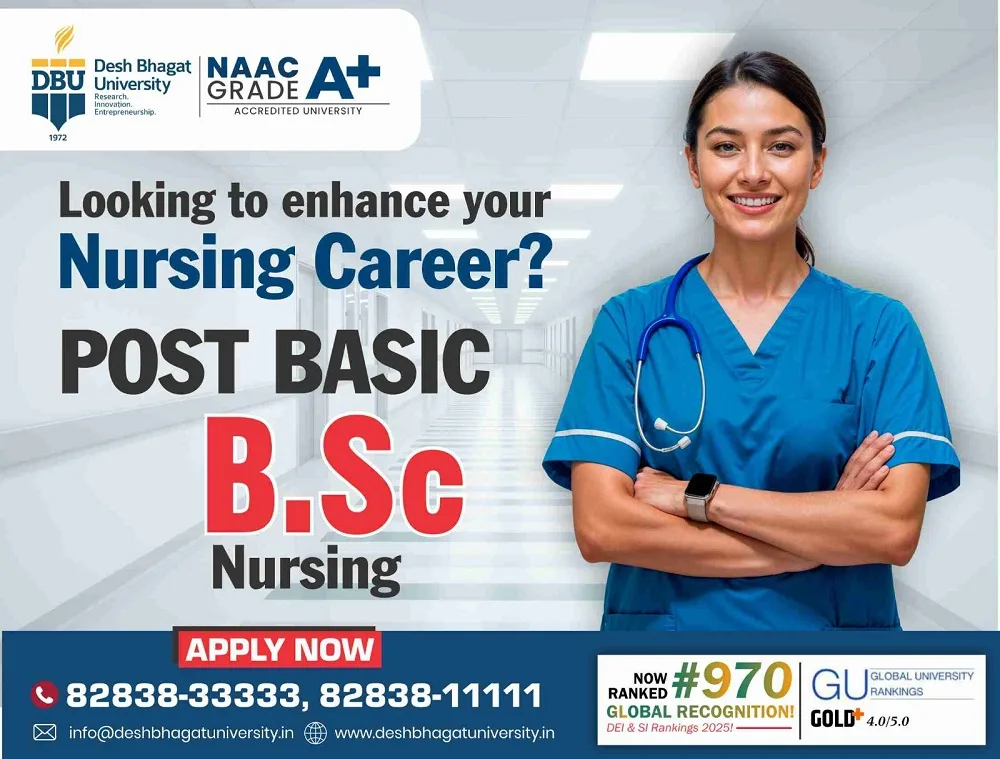
PBBSc Nursing Course: Eligibility, Syllabus – Admission 2026
The Post Basic BSc Nursing course is an excellent option for GNM-qualified nurses who want to upgrade their qualifications and build a successful career in healthcare. This undergraduate nursing program helps students improve their clinical knowledge, patient care skills, leadership abilities, and professional expertise.
As the healthcare industry continues to grow, the demand for qualified nursing professionals is increasing in hospitals, clinics, community health centres, and healthcare organizations. A Post Basic BSc Nursing degree opens the door to better job opportunities, higher salaries, and advanced education such as M.Sc Nursing.
At Desh Bhagat University, we provide quality nursing education through experienced faculty, modern laboratories, practical clinical training, and a student-focused learning environment. Our program is designed to prepare students for the challenges of modern healthcare while helping them develop confidence and professional skills.
If you are looking to advance your nursing career after completing GNM, this guide will help you understand.
What is Post Basic BSc Nursing?
Post Basic BSc Nursing is a 2-year undergraduate degree program specially designed for students who have already completed the General Nursing and Midwifery (GNM) course. The program helps registered nurses upgrade their qualifications and gain advanced knowledge in nursing education, patient care, community health, nursing research, and hospital management.
The course combines classroom learning with clinical training. Students learn how to provide quality healthcare, manage patients, use modern nursing techniques, and work effectively in different healthcare settings.
After completing the course, graduates can work in government hospitals, private hospitals, nursing colleges, community health centres, rehabilitation centres, research organizations, and many other healthcare institutions.
Post Basic BSc Nursing Course Highlights
| Particular | Details |
| Course Name | Post Basic BSc Nursing |
| Course Level | Undergraduate |
| Course Duration | 2 Years |
| Eligibility | GNM with Registered Nurse and Registered Midwife (RNRM) registration |
| Admission Process | As per university admission guidelines |
| Mode of Study | Regular |
| Internship | Clinical Training Included |
| Career Options | Staff Nurse, Nursing Officer, ICU Nurse, Community Health Nurse, Nursing Educator, Clinical Instructor |
| Higher Education | M.Sc Nursing, MBA Hospital Management, MPH, PG Diploma Courses |
Why Choose Post Basic BSc Nursing?
Choosing the right nursing course is an important step for your future. Post Basic BSc Nursing offers several benefits for GNM-qualified nurses who want to grow professionally.
Upgrade Your Qualification
The course helps GNM graduates earn a bachelor’s degree in nursing, improving their academic and professional profile.
Better Career Opportunities
Many hospitals and healthcare organizations prefer nurses with a bachelor’s degree for advanced clinical and leadership roles.
Higher Salary Potential
Qualified nurses with a Post Basic BSc Nursing degree often have access to better-paying positions compared to GNM graduates.
Improve Clinical Skills
Students gain advanced knowledge in patient care, nursing procedures, healthcare technology, and evidence-based nursing practices.
Leadership and Management Skills
The course also focuses on nursing administration, communication, teamwork, and healthcare management.
Opportunities for Higher Education
Graduates can continue their education through M.Sc Nursing, public health programs, hospital management courses, or other specialized nursing programs.
Growing Demand for Nurses
Healthcare services are expanding rapidly in India and across the world. Skilled nursing professionals continue to be in demand in hospitals, clinics, and community healthcare organizations.
Why Study Post Basic BSc Nursing at Desh Bhagat University?
At Desh Bhagat University, we are committed to preparing skilled and compassionate nursing professionals. Our nursing program focuses on both academic excellence and practical learning.
Some of the benefits of studying with us include:
- Experienced and supportive faculty
- Well-equipped nursing laboratories
- Modern classrooms
- Clinical training in healthcare settings
- Student-focused learning environment
- Research and professional development opportunities
- Career guidance and placement support
Our goal is to help students become confident healthcare professionals who can provide quality patient care.
Post Basic BSc Nursing Eligibility Criteria
Students must meet the university’s eligibility requirements before applying for the course.
| Eligibility Criteria | Details |
| Educational Qualification | General Nursing and Midwifery (GNM) |
| Registration | Registered Nurse and Registered Midwife (RNRM) |
| Medical Fitness | Candidate should be medically fit as per university norms |
| Admission | As per university admission guidelines |
Applicants are advised to check the latest admission requirements before applying.
Post Basic BSc Nursing Admission Process
| Step | Admission Process |
| Step 1 | Choose the Post Basic BSc Nursing course. |
| Step 2 | Check the eligibility criteria. |
| Step 3 | Complete the application form. |
| Step 4 | Submit the required documents. |
| Step 5 | Complete the admission formalities as per university guidelines. |
| Step 6 | Confirm your admission and begin your nursing journey at Desh Bhagat University. |
Note: Students are advised to our website regularly for the latest admission updates, eligibility requirements, and important dates.
Post Basic BSc Nursing Course Duration
The Post Basic BSc Nursing course is completed over 2 years and is divided into 4 semesters.
The curriculum includes both theoretical learning and practical clinical training. Students gain hands-on experience in hospitals and healthcare settings, allowing them to apply classroom knowledge to real patient care.
Throughout the program, students develop professional skills in nursing practice, patient safety, communication, healthcare management, and community health services.
Post Basic BSc Nursing Subjects and Semester-wise Syllabus
The syllabus is designed to provide advanced nursing knowledge along with practical clinical experience.
| Semester | Major Subjects |
| Semester I | Nursing Foundation, Biochemistry and Biophysics, Psychology, Nutrition and Dietetics, Maternal Nursing |
| Semester II | Medical-Surgical Nursing, Microbiology, Child Health Nursing, Pharmacology, Pathology |
| Semester III | Community Health Nursing, Mental Health Nursing, Nursing Education, Nursing Administration |
| Semester IV | Nursing Research and Statistics, Professional Trends, Clinical Training, Project Work, Internship |
Note: The syllabus may be updated by the university from time to time. Students should refer to the latest curriculum issued by Desh Bhagat University.
Skills Required for PBBSc Nursing Course
To become a successful nursing professional, students should develop both technical and interpersonal skills. These skills help nurses provide safe, effective, and patient-centred healthcare services.
| Skill | Why It Is Important |
|---|---|
| Patient Care & Compassion | Helps nurses provide quality care with empathy and respect for patients. |
| Communication Skills | Enables clear communication with patients, families, doctors, and healthcare teams. |
| Critical Thinking | Supports quick assessment of patient conditions and informed clinical decisions. |
| Clinical Decision-Making | Helps nurses respond effectively to medical situations and emergencies. |
| Time Management | Ensures efficient handling of multiple responsibilities and patient care tasks. |
| Leadership Skills | Prepares nurses to guide healthcare teams and manage nursing responsibilities. |
| Teamwork | Promotes effective collaboration with doctors, nurses, and other healthcare professionals. |
| Problem-Solving Skills | Helps identify challenges and provide appropriate patient care solutions. |
| Attention to Detail | Reduces medical errors and ensures accurate documentation and treatment. |
| Professional Ethics | Encourages ethical practice, patient confidentiality, and professional responsibility. |
| Emergency Care Skills | Enables nurses to provide immediate care during critical medical situations. |
| Adaptability | Helps nurses work confidently in different healthcare environments and changing situations. |
These skills are developed through classroom learning, practical training, and clinical experience during the PBBSc Nursing Course at Desh Bhagat University.
Career Opportunities after Post Basic BSc Nursing
Completing a Post Basic BSc Nursing degree opens the door to many rewarding career opportunities. Healthcare services are growing rapidly, and qualified nurses are needed in hospitals, clinics, rehabilitation centres, community health organisations, nursing colleges, and research institutions.
Graduates can choose to work in patient care, nursing education, healthcare management, public health, or specialized nursing departments. With experience and additional qualifications, nurses can also move into leadership and administrative roles.
| Job Role | Description |
| Staff Nurse | Provides direct patient care in hospitals and healthcare centres. |
| Nursing Officer | Manages nursing services and ensures quality patient care. |
| ICU Nurse | Cares for critically ill patients in Intensive Care Units. |
| Emergency Nurse | Handles emergency and trauma cases in hospitals. |
| Community Health Nurse | Promotes healthcare and disease prevention in communities. |
| Operation Theatre (OT) Nurse | Assists surgeons during surgical procedures. |
| Clinical Instructor | Trains nursing students in colleges and hospitals. |
| Nursing Educator | Teaches nursing subjects in educational institutions. |
| Ward Supervisor | Supervises nursing staff and hospital wards. |
| Home Healthcare Nurse | Provides nursing care to patients at home. |
Post Basic BSc Nursing Salary in India
The salary after completing a Post Basic BSc Nursing course depends on factors such as job role, experience, employer, location, and skills. Fresh graduates may start with entry-level salaries, while experienced professionals can earn significantly more.
Average Salary
| Job Role | Average Salary (Per Year)* |
| Staff Nurse | ₹3 – ₹6 LPA |
| Nursing Officer | ₹4 – ₹8 LPA |
| ICU Nurse | ₹4 – ₹7 LPA |
| OT Nurse | ₹3.5 – ₹7 LPA |
| Community Health Nurse | ₹3 – ₹6 LPA |
| Nursing Educator | ₹4 – ₹8 LPA |
| Clinical Instructor | ₹3.5 – ₹7 LPA |
| Ward Supervisor | ₹5 – ₹9 LPA |
*Note: Salary figures are approximate and may vary based on the employer, experience, location, and individual skills.
Government Job Opportunities After PBBSc Nursing Course
Graduates of the PBBSc Nursing Course can explore various government job opportunities in the healthcare sector. Government organizations regularly recruit qualified nursing professionals to provide quality patient care and support public health services.
Government Career Opportunities
| Organization/Department | Career Opportunities |
|---|---|
| Government Hospitals | Staff Nurse, Nursing Officer, Ward In-charge |
| District Hospitals | Clinical Nursing and Patient Care Services |
| Primary Health Centres (PHCs) | Community Healthcare and Primary Nursing Services |
| Community Health Centres (CHCs) | Public Health Nursing and Patient Care |
| Government Medical Colleges | Nursing Officer, Clinical Instructor, Nursing Tutor |
| Public Health Departments | Community Health Programmes and Health Awareness Initiatives |
| Defence Healthcare Services | Nursing positions in defence medical services (subject to recruitment) |
| Railway Hospitals | Nursing and Patient Care Services in Railway Healthcare Units |
| Research Institutions | Clinical Research and Healthcare Projects |
| National Health Programmes | Public Health, Immunization, and National Healthcare Initiatives |
Government nursing careers offer several benefits, including job stability, competitive salaries, career advancement opportunities, professional development, and the chance to contribute to public healthcare services.
Note: Recruitment, eligibility criteria, and selection processes vary by organization and government regulations. Candidates should refer to the official recruitment notifications for the latest updates.
Private Sector Job Opportunities
Graduates of the PBBSc Nursing Course have excellent career opportunities in the private healthcare sector. As India’s healthcare industry continues to expand, hospitals and healthcare organizations are actively hiring qualified nursing professionals to deliver quality patient care.
Private Sector Career Opportunities
| Organization | Career Opportunities |
|---|---|
| Multi-speciality Hospitals | Staff Nurse, ICU Nurse, Emergency Nurse, Ward Supervisor |
| Super-speciality Hospitals | Specialized Nursing in Cardiology, Oncology, Neurology, and Critical Care |
| Private Medical Colleges | Clinical Instructor, Nursing Tutor, Nursing Educator |
| Nursing Homes | Patient Care and Clinical Nursing Services |
| Rehabilitation Centres | Rehabilitation and Long-term Patient Care |
| Diagnostic Centres | Patient Assistance and Diagnostic Care Support |
| Home Healthcare Services | Home Care Nurse and Patient Support Services |
| Corporate Healthcare Organizations | Occupational Health Nurse and Healthcare Coordinator |
| Non-Governmental Organizations (NGOs) | Community Health Programmes and Public Health Initiatives |
| International Healthcare Organizations | Nursing opportunities abroad (subject to country-specific licensing requirements) |
The private healthcare sector offers competitive salaries, modern work environments, advanced medical technologies, specialized training, career growth opportunities, and exposure to diverse healthcare practices.
Note: Job roles, responsibilities, and salary packages may vary depending on the organization, location, experience, and individual qualifications.
Higher Education after Post Basic BSc Nursing
Many students choose to continue their education after completing the course. Higher education helps improve knowledge, develop specialized skills, and create better career opportunities.
Some popular options include:
| Course | Benefits |
| M.Sc Nursing | Advanced nursing education and specialization |
| Master of Public Health (MPH) | Career in public health and healthcare management |
| MBA in Hospital Management | Leadership and hospital administration roles |
| PG Diploma Courses | Specialized knowledge in different nursing fields |
| Certificate Courses | Skill development in critical care, oncology, dialysis, emergency care, and more |
Higher education can also lead to careers in teaching, research, healthcare administration, and policy development.
Scope of Post Basic BSc Nursing in India and Abroad
The scope of Post Basic BSc Nursing is expanding as healthcare services continue to grow. Qualified nurses are needed in both urban and rural healthcare systems.
In India, graduates can find opportunities in:
- Government Hospitals
- Private Hospitals
- Medical Colleges
- Community Health Centres
- NGOs
- Public Health Programmes
Internationally, skilled nursing professionals are also in demand. After meeting the licensing and registration requirements of the respective country, graduates may explore career opportunities in countries that require qualified nurses.
Post Basic BSc Nursing vs BSc Nursing
Many students are confused between BSc Nursing and Post Basic BSc Nursing. Both courses lead to rewarding nursing careers, but they are designed for different groups of students.
| Feature | BSc Nursing | Post Basic BSc Nursing |
| Eligibility | 10+2 with Science | GNM Qualification |
| Course Duration | 4 Years | 2 Years |
| Course Level | Undergraduate | Undergraduate (Bridge Programme) |
| Clinical Training | Yes | Yes |
| Higher Education | M.Sc Nursing | M.Sc Nursing |
| Career Opportunities | Excellent | Excellent |
Students who have completed GNM generally choose Post Basic BSc Nursing to upgrade their qualifications and improve their career prospects.
Key Takeaways
Before applying for the course, remember these important points:
- Post Basic BSc Nursing is a 2-year undergraduate programme.
- The course is designed for GNM-qualified registered nurses.
- Students receive both classroom learning and practical clinical training.
- Graduates can work in hospitals, community healthcare, nursing education, and research.
- Higher education options include M.Sc Nursing, MPH, and MBA in Hospital Management.
- The course helps improve career opportunities, professional skills, and salary potential.
Conclusion
The Post Basic BSc Nursing course is an excellent choice for GNM-qualified nurses who want to advance their education and strengthen their professional skills. The programme combines theoretical knowledge with practical clinical training, preparing students to deliver quality healthcare in different medical settings.
Graduates can explore rewarding career opportunities in government hospitals, private healthcare organizations, community health centres, nursing education, research institutions, and many other sectors. The course also provides a strong foundation for higher education, including M.Sc Nursing, public health, and hospital management programmes.
At Desh Bhagat University, we are committed to helping students achieve their career goals through quality education, practical learning, experienced faculty, and a supportive academic environment. If you are ready to take the next step in your nursing career, Post Basic BSc Nursing can help you build a brighter future in the healthcare industry.
FAQs
Post Basic BSc Nursing is a two-year undergraduate nursing programme designed for GNM-qualified registered nurses who want to upgrade their qualifications and expand their career opportunities.
The course duration is 2 years, divided into 4 semesters.
Candidates who have completed General Nursing and Midwifery (GNM) and have Registered Nurse and Registered Midwife (RNRM) registration can apply, subject to the university’s eligibility criteria.
The course includes subjects such as Nursing Foundation, Medical-Surgical Nursing, Community Health Nursing, Mental Health Nursing, Child Health Nursing, Nursing Education, Nursing Administration, Nursing Research, and Clinical Training.
Graduates can work as Staff Nurses, Nursing Officers, ICU Nurses, Community Health Nurses, Clinical Instructors, Nursing Educators, OT Nurses, and Ward Supervisors in various healthcare organizations.
Yes. Eligible graduates can pursue M.Sc Nursing and other higher education programmes based on the admission requirements.
Yes. It is a good career option for GNM-qualified nurses who want to improve their qualifications, increase their job opportunities, and build a successful career in healthcare.
The average salary depends on experience, location, and employer. Fresh graduates may earn around ₹3–6 LPA, while experienced professionals can earn higher salaries.
Yes. Eligible graduates can apply for recruitment opportunities in government hospitals, public health departments, community health centres, and other government healthcare organizations as per recruitment rules.
Desh Bhagat University offers experienced faculty, modern laboratories, practical clinical training, student-focused learning, research opportunities, and career guidance to help students build successful nursing careers.