Master of Medical Radiology and Imaging Technology (MMRIT)
May 1, 2026 2026-05-04 4:08Master of Medical Radiology and Imaging Technology (MMRIT)
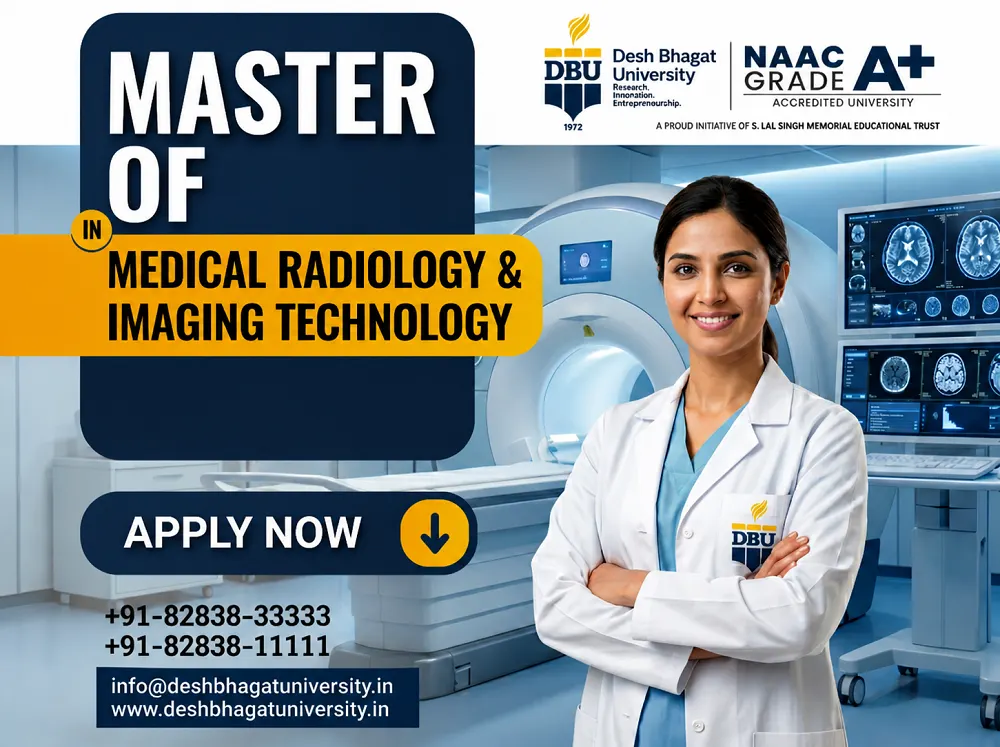
Master of Medical Radiology and Imaging Technology (MMRIT)
At Desh Bhagat University, we focus on providing quality education in healthcare and allied sciences. One of our important postgraduate programmes is the Master of Medical Radiology and Imaging Technology. This course is designed for students who want to build a strong and stable career in medical imaging.
In this article, you will understand the course, eligibility, subjects, career scope, and many other important details.
What is Master of Medical Radiology and Imaging Technology?
The Master of Medical Radiology and Imaging Technology is a postgraduate course in healthcare. It focuses on imaging techniques used to diagnose diseases.
Doctors use machines like:
- X-ray
- CT Scan
- MRI
- Ultrasound
These machines help doctors see inside the human body. Students in this course learn how to use these machines safely and correctly.
At Desh Bhagat University, we design this programme to give both theory and practical knowledge. Students not only learn concepts but also get hands-on training.
Course Highlights of MMRIT
The MMRIT is a well-structured programme. It helps students gain deep knowledge in radiology.
| Particulars | Details |
| Course Name | Master of Medical Radiology and Imaging Technology (MMRIT) |
| Course Level | Postgraduate |
| Duration | 2 Years |
| Total Semesters | 4 Semesters |
| Mode | Regular |
| Field | Allied Health Sciences |
At Desh Bhagat University, we ensure that the course follows a modern and industry-based curriculum.
Eligibility Criteria
To apply for the Master of Medical Radiology and Imaging Technology (MMRIT), students must meet basic requirements.
| Criteria | Requirement |
| Qualification | Bachelor of Medical Radiology & Imaging Technology (BMRIT) |
| Minimum Marks | 60% (55% for reserved category) |
| University | Recognized University |
We make sure that students entering this course have a strong basic understanding of radiology.
Why Choose Master of Medical Radiology and Imaging Technology (MMRIT)?
At Desh Bhagat University, we focus on student success. There are many reasons to choose this course.
1. Modern Labs
We provide advanced imaging labs. Students learn using real machines.
2. Practical Training
We give strong practical exposure. Students learn by doing real tasks.
3. Experienced Faculty
Our teachers have good experience in healthcare and radiology.
4. Industry-Based Curriculum
The syllabus is designed as per industry needs.
5. Career Support
We help students with placement and career guidance.
We offer a wide range of Allied Health Sciences programmes that are designed for modern healthcare careers.
Course Curriculum
The MMRIT is divided into four semesters. Each semester focuses on different topics.
| Semester | Subjects |
| Semester 1 | Anatomy, Advanced Radiology Physics, Basic Imaging |
| Semester 2 | Radiographic Techniques, Radiation Safety, Equipment |
| Semester 3 | CT Scan, MRI, Advanced Imaging |
| Semester 4 | Clinical Training, Research Project |
We ensure that the curriculum is easy to understand and useful for real work.
Skills You Will Learn
During this program, students develop many important skills.
Technical Skills
- Operating imaging machines
- Understanding medical images
- Handling radiology equipment
- Maintaining safety standards
Soft Skills
- Communication with patients
- Teamwork with doctors
- Problem-solving skills
- Time management
These skills help students work confidently in hospitals.
Practical Training at Desh Bhagat University
At Desh Bhagat University, we focus strongly on practical learning. This is very important in radiology.
Students get:
- Hands-on practice on imaging machines
- Real case observation
- Hospital exposure
- Training in diagnostic procedures
This practical knowledge helps students become job-ready.
Importance of MMRIT in Healthcare
The role of imaging in healthcare is very important. Doctors depend on imaging reports to make decisions.
The Master of Medical Radiology and Imaging Technology prepares students for this role.
Radiology helps in:
- Early disease detection
- Accurate diagnosis
- Better treatment planning
That is why skilled professionals are always needed.
Career Scope after MMRIT
After completing the MMRIT, many career options are available.
Job Roles
- Radiology Technologist
- MRI Technician
- CT Scan Technician
- X-ray Technician
- Imaging Specialist
Employment Areas
- Hospitals
- Diagnostic Centres
- Clinics
- Research Centres
- Medical Colleges
At Desh Bhagat University, we help students connect with job opportunities.
Salary and Growth
The salary after the Master of Medical Radiology and Imaging Technology depends on skills and experience.
- Freshers can earn a good starting salary
- Experienced professionals earn higher pay
- Growth opportunities are strong in healthcare
With experience, students can move to senior positions.
Higher Study Options
After completing the MMRIT, students can continue their education.
Options include:
- PhD in Radiology
- Research programmes
- Teaching careers
At Desh Bhagat University, we support students who want to go into research or academics.
Admission Process
The admission process at Desh Bhagat University is simple.
Steps:
- Fill the Application Form
- Submit documents
- Check eligibility
- Confirm admission
We guide students at every step.
Facilities at Desh Bhagat University
At Desh Bhagat University, we provide modern facilities to support learning.
- Advanced laboratories
- Digital classrooms
- Library with updated books
- Practical training support
These facilities help students learn better.
Who Should Choose MMRIT?
The MMRIT is best for students who:
- Have an interest in healthcare
- Want to work with medical machines
- Like practical learning
- Want a stable career
This course is perfect for students who want to grow in the medical field.
Future Demand of Radiology Professionals
Healthcare is growing fast. The demand for imaging professionals is increasing.
Hospitals and diagnostic centres need trained experts. The Master of Medical Radiology and Imaging Technology prepares students for these roles.
This makes it a future-ready career option.
Conclusion
The MMRIT is a valuable course for students who want to build a career in medical imaging.
At Desh Bhagat University, we provide quality education, practical training, and strong career support. Students gain knowledge, skills, and confidence to work in hospitals and healthcare centres.
If you want a career in radiology, this course is a smart choice. The healthcare sector offers stability, growth, and respect.
FAQs
Master of Medical Radiology and Imaging Technology (MMRIT) is a postgraduate course in healthcare. It teaches students how to use imaging machines like X-ray, MRI, CT scan, and ultrasound. This course helps students learn how to assist doctors in diagnosing diseases safely and correctly.
The MMRIT course is a 2-year postgraduate programme. It is divided into 4 semesters. Each semester includes both theory and practical learning. This structure helps students gain proper knowledge and hands-on experience in medical imaging.
To apply for Master of Medical Radiology and Imaging Technology (MMRIT), students must have a B.Sc. degree in Radiology or Imaging Technology. They should have at least 60% marks, or 55% for reserved categories. The degree must be from a recognized university.
The Master of Medical Radiology and Imaging Technology (MMRIT) includes subjects like anatomy, radiology physics, imaging techniques, CT scan, MRI, and radiation safety. Students also learn through clinical training and research work. These subjects help students build strong technical and practical skills.
After completing Master of Medical Radiology and Imaging Technology (MMRIT), students can work as radiology technologists, MRI technicians, CT scan technicians, or imaging specialists. They can find jobs in hospitals, diagnostic centres, clinics, and research labs. Career growth in this field is strong.
Yes, Master of Medical Radiology and Imaging Technology (MMRIT) is a good career option. The demand for imaging professionals is increasing in healthcare. This course offers stable jobs, good salary, and career growth. Skilled professionals are always needed in hospitals and diagnostic centres.
Yes, Master of Medical Radiology and Imaging Technology (MMRIT) include strong practical training. Students learn to operate imaging machines and observe real cases. This hands-on experience helps students become job-ready and confident in working in hospitals and healthcare environments.
Yes, after completing MMRIT, students can go for higher studies. They can pursue a PhD, research programmes, or teaching careers. This course also opens opportunities in advanced medical imaging and academic fields for long-term growth.