MPES: Master of Physical Education & Sports – Admission 2026
September 5, 2024 2026-09-30 6:23MPES: Master of Physical Education & Sports – Admission 2026
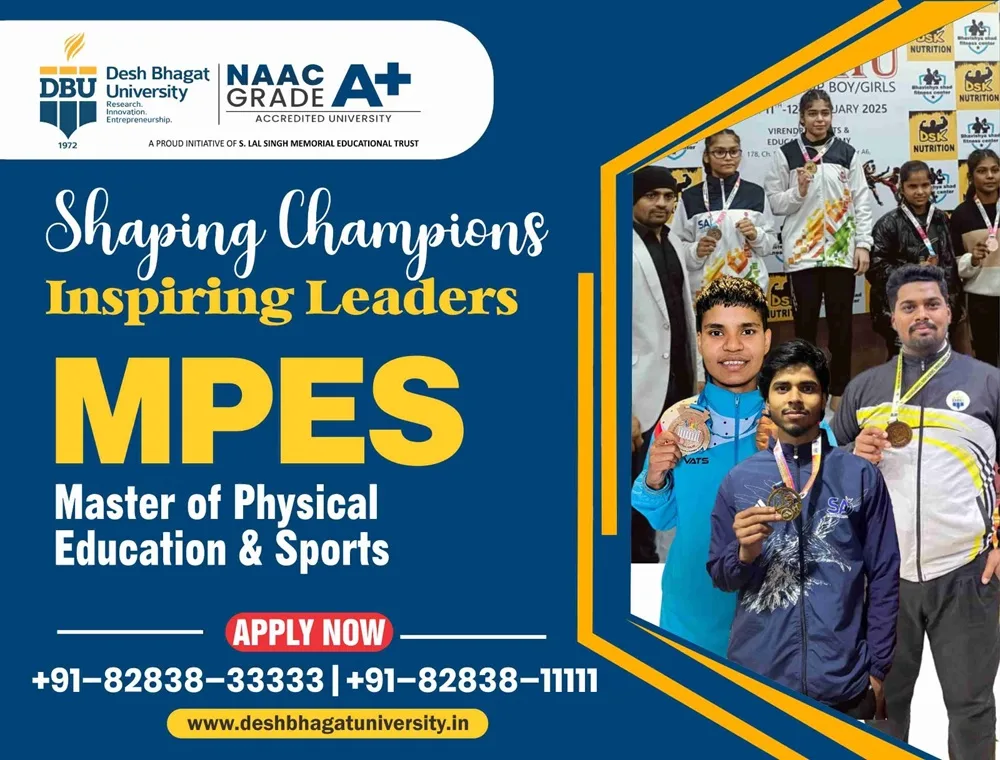
MPES: Master of Physical Education & Sports – Admission 2026
Physical education and sports are important parts of a healthy and active life. Today, sports are also connected with education, fitness, coaching, health, research, and sports management. Students who want to build advanced knowledge in these areas can choose a postgraduate programme in physical education and sports.
At Desh Bhagat University, we offer the Master of Physical Education and Sports (MPES) programme for students who want to develop their knowledge and skills in physical education, sports, fitness, and related areas.
The MPES course is designed as a postgraduate programme. It builds on the knowledge students gain through their bachelor’s degree in physical education, sports sciences, or a related field.
In this article, we explain the MPES course details, full form, eligibility, duration, syllabus, subjects, admission process, practical learning, and career opportunities.
What Is the MPES Full Form?
The MPES full form is Master of Physical Education and Sports.
MPES is a postgraduate programme that focuses on physical education and sports. It helps students develop advanced knowledge of sports, physical activity, fitness, coaching, sports science, and related areas.
At Desh Bhagat University, the programme is listed as Master of Physical Education and Sports (M.PES) under Physical Education & Sports. The programme has a duration of 2 years divided into 4 semesters.
The course can be useful for students who want to continue their education after completing a relevant bachelor’s degree.
What Is an MPES Course?
An MPES course is a postgraduate degree programme in physical education and sports.
The programme allows students to study sports and physical education at an advanced level. It can include theoretical learning, practical activities, sports training, fitness-related learning, research, and other areas connected with sports and physical education.
At Desh Bhagat University, our MPES programme is part of the Department of Physical Education and Yogic Sciences. Our sports education programmes are designed to provide students with academic knowledge and practical exposure.
MPES Course Details
The following table provides a simple overview of the programme at Desh Bhagat University.
| Course Detail | Information |
| Course Name | Master of Physical Education and Sports |
| Short Form | MPES / M.PES |
| Level | Postgraduate |
| Course Type | Master’s Degree |
| Duration | 2 Years |
| Semesters | 4 Semesters |
| Field | Physical Education and Sports |
| Eligibility | B.P.E./B.P.E.S./B.Sc. Sports Sciences/B.P.Ed. |
Desh Bhagat University’s current eligibility document lists the MPES programme as a 2-year / 4-semester programme. It states that applicants should have B.P.E., B.P.E.S., B.Sc. Sports Sciences, or B.P.Ed. from a recognised university.
MPES Course Duration
The MPES course duration at Desh Bhagat University is 2 years.
The programme is divided into 4 semesters. This gives students time to study the subjects step by step and develop both theoretical and practical knowledge.
MPES Eligibility
The MPES eligibility requirements are important for students who want to apply.
According to the current programme information published by Desh Bhagat University, candidates must have completed one of the following qualifications from a recognised university:
- B.P.E.
- B.P.E.S.
- B.Sc. Sports Sciences
- B.P.Ed.
Students should check the latest admission notification before applying because admission requirements can be updated for a particular academic session.
Who Can Choose MPES?
The MPES programme can be considered by students who have completed a relevant bachelor’s degree and want to continue their education in physical education and sports.
| Who Can Choose MPES? | How MPES Can Be Relevant |
|---|---|
| Students with a Relevant Bachelor’s Degree | Students who have completed a relevant bachelor’s degree can consider pursuing the MPES programme for advanced study in physical education and sports. |
| Sports Enthusiasts | Students interested in sports can develop their understanding of sports activities, performance, and training. |
| Physical Education Students | The Master of Physical Education and Sports (MPES) can help students build advanced knowledge in physical education. |
| Fitness Enthusiasts | Students interested in fitness, exercise, and physical well-being can explore this programme. |
| Aspiring Coaches | Students interested in sports coaching and training can develop relevant knowledge and skills. |
| Sports Science Aspirants | MPES can be considered by students interested in sports science, physical performance, and related areas. |
| Sports Management Aspirants | Students interested in managing sports activities, programmes, and organisations can explore this field. |
| Health and Wellness Enthusiasts | Students interested in health, wellness, physical activity, and fitness may find MPES relevant to their academic interests. |
| Teaching Aspirants | Students planning to build careers in physical education and teaching can consider higher studies in this field. |
| Research Aspirants | Students interested in academic research related to physical education, sports, and fitness can pursue advanced study in this area. |
| Sports Administration Aspirants | Students interested in sports administration and organising sports programmes can explore the opportunities associated with MPES. |
Students who enjoy physical activity and want to understand the academic and scientific side of sports can explore the programme.
MPES Syllabus
The MPES syllabus covers different areas related to physical education, sports, fitness, and research.
The Desh Bhagat University MPES information describes areas such as sports science, biomechanics, sports management, psychology, exercise physiology, sports medicine, and research methodology as part of the programme’s academic focus.
The syllabus may include both theoretical and practical learning.
Important Areas in the MPES Syllabus
| Subject Area | Main Focus |
| Exercise Physiology | Body response to physical activity |
| Sports Psychology | Mental factors related to sports and performance |
| Sports Medicine | Sports injuries, prevention and rehabilitation |
| Biomechanics | Body movement and forces |
| Sports Management | Management of sports programmes and activities |
| Sports Science | Scientific study of sports and physical activity |
| Research Methodology | Research methods and academic study |
| Coaching | Sports training and coaching principles |
| Fitness | Physical fitness and exercise |
| Health Education | Health, fitness and active living |
The exact paper names, semester-wise subjects, practical components, and academic requirements should be checked in the latest curriculum issued by Desh Bhagat University.
MPES Subjects
The MPES subjects help students understand sports from physical, scientific, psychological, management, and research perspectives.
| MPES Subject | What Students Learn | Key Areas Covered |
|---|---|---|
| Exercise Physiology | Students learn how the human body responds and adapts to physical activity and exercise. | Cardiovascular system, muscular system, respiratory system, exercise response, physical performance |
| Sports Psychology | This subject focuses on the mental and psychological aspects of sports participation and performance. | Motivation, concentration, stress, confidence, behaviour, mental performance |
| Sports Medicine | Students gain knowledge of health, injury prevention, and safe participation in sports and physical activities. | Injury prevention, basic treatment concepts, rehabilitation, sports health, safe exercise |
| Biomechanics | Students study body movement and the forces involved in physical activities and sports. | Body movement, forces, movement patterns, sports techniques, physical performance |
| Sports Management | This subject introduces students to the organisation and management of sports activities and programmes. | Sports organisations, events, programmes, facilities, management practices |
| Research Methodology | Students learn the basic methods used to conduct, analyse, and present academic research. | Research topics, data collection, data analysis, findings, research presentation |
| Sports Training | Students learn how planned training programmes can support fitness development and sports performance. | Training principles, exercise planning, fitness development, sports-specific preparation |
| Health Education | Students understand the connection between physical activity, fitness, lifestyle, and overall wellbeing. | Health, fitness, physical activity, lifestyle, wellness |
Practical Learning in MPES
Practical learning is an important part of the MPES programme because physical education and sports involve both theoretical knowledge and practical application. Students can develop their understanding through observation, practice, training, and participation in sports-related activities.
At Desh Bhagat University, our sports education approach includes academic learning along with practical exposure and on-field experience. This can help students understand how concepts related to physical education, fitness, coaching, and sports training are applied in real situations.
| Practical Skill | What Students Can Develop |
|---|---|
| Sports Activities | Practical understanding of different sports activities and participation techniques. |
| Physical Fitness | Knowledge and practical experience related to fitness, exercise, and physical conditioning. |
| Coaching | Basic coaching skills and an understanding of how sports training can be planned and conducted. |
| Exercise | Practical knowledge of exercises used to support fitness and physical performance. |
| Sports Training | Understanding of training methods, preparation, and performance development. |
| Performance Observation | Ability to observe and understand physical performance during sports and training activities. |
| Teamwork | Development of cooperation, coordination, and team participation skills. |
| Sports Management | Practical exposure to organising and managing sports activities, programmes, and events. |
| Communication | Development of communication skills useful for coaching, teaching, and sports-related activities. |
| Leadership | Opportunities to develop leadership, responsibility, decision-making, and team-management skills. |
Why Practical Learning Matters in MPES
Practical exposure can help students connect the concepts studied in the Master of Physical Education and Sports (MPES) with real-world sports and physical education activities. It can also support the development of professional skills required in areas such as sports training, coaching, fitness, teaching, sports management, and physical education.
Importance of Physical Education
Physical education is more than playing games or participating in sports. It is a field that covers physical activity, exercise, fitness, health, movement, sports skills, and active living. It helps students understand the importance of maintaining physical fitness and developing healthy habits.
| Area | What Students Can Learn |
|---|---|
| Physical Fitness | Students can understand the importance of fitness, strength, endurance, flexibility, and regular physical activity. |
| Healthy Lifestyle | Physical education encourages awareness of healthy habits and an active lifestyle. |
| Teamwork | Sports and physical activities help students develop cooperation, coordination, and team participation skills. |
| Discipline | Regular training and participation can help students understand the value of discipline, consistency, and responsibility. |
| Leadership | Sports activities can provide opportunities to develop leadership, decision-making, and organisational skills. |
| Sports Skills | Students can develop knowledge and practical understanding of different sports activities and techniques. |
| Exercise | Physical education helps students understand the role of exercise in fitness and overall physical wellbeing. |
| Health Awareness | Students can learn about the relationship between physical activity, fitness, health, and wellbeing. |
| Physical Activity | Students can understand the importance of regular movement and participation in physical activities. |
Physical Education and Higher Studies
Higher education in physical education and sports allows students to explore these areas in greater depth. Programmes such as the Master of Physical Education and Sports (MPES) can provide advanced academic knowledge related to sports, fitness, training, physical education, research, and sports management.
Importance of Sports Science
Sports science combines knowledge from different fields to understand physical activity, exercise, fitness, sports performance, and human movement. It helps students study how the body performs during physical activity and how different factors can influence sports performance.
| Sports Science Area | What It Covers |
|---|---|
| Exercise Physiology | Studies how the body responds and adapts to exercise and physical activity. |
| Biomechanics | Examines body movement, forces, and techniques involved in sports and exercise. |
| Sports Psychology | Focuses on motivation, concentration, confidence, stress, and other mental factors related to sports. |
| Sports Medicine | Covers areas related to sports health, injury prevention, rehabilitation, and safe physical activity. |
| Fitness | Helps students understand physical fitness, conditioning, endurance, strength, and overall performance. |
| Nutrition | Introduces the relationship between nutrition, physical activity, fitness, and sports performance. |
| Sports Training | Covers training principles, exercise planning, physical preparation, and performance development. |
| Research | Helps students understand how research can be used to study sports, physical activity, fitness, and performance. |
Sports Science and MPES
The Master of Physical Education and Sports (MPES) provides students with an opportunity to study different aspects of physical education and sports in greater depth. Through subjects related to exercise physiology, biomechanics, sports psychology, sports medicine, training, fitness, management, and research, students can develop a broader understanding of sports science and its application in physical education and sports.
Research in MPES
Research is an important part of postgraduate education and can help students develop a deeper understanding of physical education, sports, fitness, exercise, and sports performance. As part of the MPES programme, students can learn the basic principles and methods used to conduct academic research.
| Research Area | What Students Learn |
|---|---|
| Selecting a Research Topic | Students learn how to identify and select a relevant topic related to physical education, sports, fitness, or exercise. |
| Reviewing Previous Studies | Students learn how to study existing research and understand the work already conducted in a particular area. |
| Developing Research Questions | Students learn how to frame clear research questions based on their selected topic. |
| Data Collection | Students understand different methods of collecting information and data for academic research. |
| Data Analysis | Students learn how to organise, examine, and analyse collected information. |
| Interpreting Results | Students learn how to understand research findings and connect them with the research objectives. |
| Research Report Writing | Students develop skills for organising research information and preparing academic research reports. |
| Presenting Findings | Students learn how to communicate and present research findings in a clear and structured manner. |
Importance of Research in MPES
Research skills can help Master of Physical Education and Sports (MPES) students develop analytical and academic abilities. These skills may be useful for students who want to continue their education, pursue research, work in academic environments, or explore research-related areas of physical education and sports.
Skills Students Can Develop During MPES
The MPES programme can help students develop academic, practical, and professional skills related to physical education, sports, fitness, coaching, research, and management. These skills can support students in different academic and professional areas.
| Skill | How Students Can Develop It Through MPES |
|---|---|
| Communication Skills | Students can improve communication through classroom discussions, presentations, group activities, sports training, and practical sessions. |
| Leadership Skills | Sports activities and teamwork can provide opportunities to develop leadership, responsibility, decision-making, and coordination skills. |
| Coaching Skills | Students can develop knowledge of sports training, exercise, physical activities, coaching principles, and performance development. |
| Research Skills | Postgraduate study can help students develop skills in research methodology, data collection, analysis, interpretation, and academic writing. |
| Management Skills | Students can learn basic principles related to organising sports activities, programmes, events, facilities, and other sports-related activities. |
| Fitness Knowledge | Students can develop a deeper understanding of exercise, physical fitness, training, physical activity, and healthy active lifestyles. |
Why These Skills Matter
The skills developed during the Master of Physical Education and Sports (MPES) can support students in areas such as physical education, sports coaching, fitness, sports training, teaching, research, and sports management. The combination of academic knowledge and practical skills can help students understand different aspects of the sports and physical education field.
Career Opportunities After MPES
After completing the MPES course, graduates can explore career areas related to physical education, sports, fitness, coaching, management, and research.
Possible career areas include:
| Career Area | General Work |
| Physical Education Teacher | Teaching physical education and sports |
| Sports Coach | Training players and sports participants |
| Fitness Trainer | Planning and guiding fitness activities |
| Sports Manager | Managing sports programmes and activities |
| Sports Coordinator | Coordinating sports events and programmes |
| Sports Researcher | Conducting research in sports and physical education |
| Sports Instructor | Providing instruction in physical activities |
| Fitness Professional | Supporting fitness and exercise programmes |
| Sports Administrator | Supporting sports organisations and activities |
| Academic Career | Teaching or pursuing further academic work |
Career opportunities depend on qualifications, skills, experience, employer requirements, and applicable recruitment rules.
MPES and Teaching Careers
Students interested in education can explore teaching-related career areas after completing the Master of Physical Education and Sports (MPES). Physical education professionals may work in educational institutions where they can teach physical education, organise sports activities, guide students, and encourage active and healthy lifestyles.
However, eligibility for specific teaching positions may vary depending on the institution, recruitment rules, required qualifications, and applicable regulations. Students should check the requirements for each position before applying.
| Teaching Career Area | Possible Responsibilities |
|---|---|
| Physical Education Teaching | Teaching physical education concepts, exercise, fitness, and sports-related activities. |
| Sports Activities | Planning and organising sports activities and physical education programmes. |
| Student Guidance | Supporting students in developing sports skills, fitness habits, teamwork, and discipline. |
| Fitness Activities | Conducting or supporting physical fitness and exercise activities. |
| Sports Participation | Encouraging students to participate in sports and physical activities. |
MPES and Sports Coaching
Sports coaching is another career area related to physical education and sports. A sports coach helps players develop their sports skills, physical fitness, training habits, and performance.
The MPES programme can provide academic knowledge related to several areas that may be relevant to sports coaching.
| Area of Knowledge | Relevance to Sports Coaching |
|---|---|
| Training Methods | Helps students understand principles of planned sports training and physical preparation. |
| Exercise | Develops knowledge of exercises used for fitness and physical conditioning. |
| Sports Psychology | Introduces psychological factors such as motivation, concentration, confidence, and performance. |
| Biomechanics | Helps students understand body movement and techniques used during sports activities. |
| Fitness | Builds knowledge of physical fitness, conditioning, and performance development. |
| Sports Science | Provides broader knowledge of scientific concepts related to sports and physical activity. |
| Leadership | Supports the development of communication, teamwork, responsibility, and leadership skills. |
| Performance Analysis | Helps students understand how sports performance can be observed and evaluated. |
Specific eligibility and qualification requirements for coaching positions can vary according to the sport, organisation, and position.
MPES and Sports Management
Sports management involves planning, organising, and managing sports activities, programmes, events, facilities, and organisations. Students interested in the organisational side of sports can develop relevant knowledge through postgraduate study in physical education and sports.
| Sports Management Area | Possible Work Activities |
|---|---|
| Sports Events | Planning, coordinating, and supporting sports events and competitions. |
| Sports Facilities | Supporting the organisation and management of sports facilities and resources. |
| Sports Programmes | Assisting with the planning and coordination of sports and fitness programmes. |
| Team Administration | Supporting administrative activities related to sports teams and participants. |
| Sports Organisations | Working with organisations involved in sports activities, programmes, and operations. |
| Fitness Centres | Supporting the management and coordination of fitness-related activities and services. |
| Sports Operations | Assisting with the day-to-day planning and coordination of sports activities and operations. |
Career Scope After MPES
The MPES career scope can extend across teaching, sports coaching, fitness, sports training, research, and sports management. Career opportunities and eligibility requirements can differ by employer, position, sport, and applicable regulations, so students should verify the specific requirements before applying.
Further Studies After MPES
Students who want to continue their academic journey after completing MPES can explore further study and research opportunities.
Postgraduate education can provide a foundation for students interested in research and academic work. Desh Bhagat University also lists PhD in Physical Education among its physical education and sports programmes, with eligibility and duration according to applicable UGC norms.
Students should check the latest Ph.D. eligibility requirements before applying.
Possible Academic Path
10+2 → BPES / Relevant Bachelor’s Degree → MPES → Further Research / Ph.D.
The exact pathway depends on the student’s previous qualification and the eligibility requirements of the programme.
MPES Admission Process
Students interested in the MPES (Master of Physical Education and Sports) programme can follow these general admission steps:
| Step | Admission Process |
|---|---|
| 1. Check Eligibility | Review the latest MPES eligibility criteria |
| 2. Review Programme | Check the course duration and structure |
| 3. Prepare Documents | Arrange the required academic documents |
| 4. Apply for Admission | Complete the university application form |
| 5. Submit Details | Provide the required information and documents |
| 6. Complete Admission | Complete the required admission formalities |
Why Study MPES at Desh Bhagat University?
At Desh Bhagat University, we provide postgraduate education in physical education and sports through our MPES programme.
Our programme is designed for students who want to build advanced knowledge in sports and physical education. The course combines academic learning with practical exposure.
Through MPES, we aim to help students develop knowledge and skills that can support their future careers in physical education, sports, fitness, coaching, management, and research.
Conclusion
The Master of Physical Education and Sports is a postgraduate programme for students who want to develop advanced knowledge in physical education and sports.
At Desh Bhagat University, the MPES programme has a duration of 2 years and 4 semesters. Students with B.P.E., B.P.E.S., B.Sc. Sports Sciences, or B.P.Ed. from a recognised university can meet the published eligibility requirement for the programme.
The MPES syllabus covers different areas connected with sports and physical education. These include exercise physiology, sports psychology, sports medicine, biomechanics, sports management, sports science, and research methodology.
The programme can help students build knowledge and skills for career areas such as teaching, coaching, fitness, sports management, sports administration, and research.
At Desh Bhagat University, we aim to provide students with academic knowledge and practical exposure so they can continue their learning and prepare for their future in physical education and sports.
Frequently Asked Questions
The MPES full form is Master of Physical Education and Sports. It is a postgraduate programme focused on physical education, sports, fitness, and related areas.
An MPES course is a postgraduate degree programme that provides advanced education in physical education and sports. It can include sports science, fitness, coaching, psychology, biomechanics, sports management, and research.
The MPES course duration at Desh Bhagat University is 2 years, divided into 4 semesters.
According to the current Desh Bhagat University programme information, candidates should have B.P.E., B.P.E.S., B.Sc. Sports Sciences, or B.P.Ed. from a recognised university.
The MPES syllabus covers areas related to physical education and sports. The programme information includes areas such as exercise physiology, sports psychology, sports medicine, biomechanics, sports management, sports science, and research methodology.
Some important MPES subject areas include exercise physiology, sports psychology, sports medicine, biomechanics, sports management, sports science, and research methodology.
Yes. MPES is a postgraduate master’s degree programme in physical education and sports.
After MPES, graduates can explore career areas such as physical education, sports coaching, fitness, sports management, sports administration, research, and related fields.
Yes. Students interested in research can explore further academic opportunities after MPES, subject to the eligibility requirements of the programme they choose.
Students should check the latest official programme and admission information provided by Desh Bhagat University before applying.