BDS Course: Full Form, Duration, Syllabus, & Admission 2026
December 17, 2025 2026-07-31 10:39BDS Course: Full Form, Duration, Syllabus, & Admission 2026
BDS Course: Full Form, Duration, Syllabus, & Admission 2026
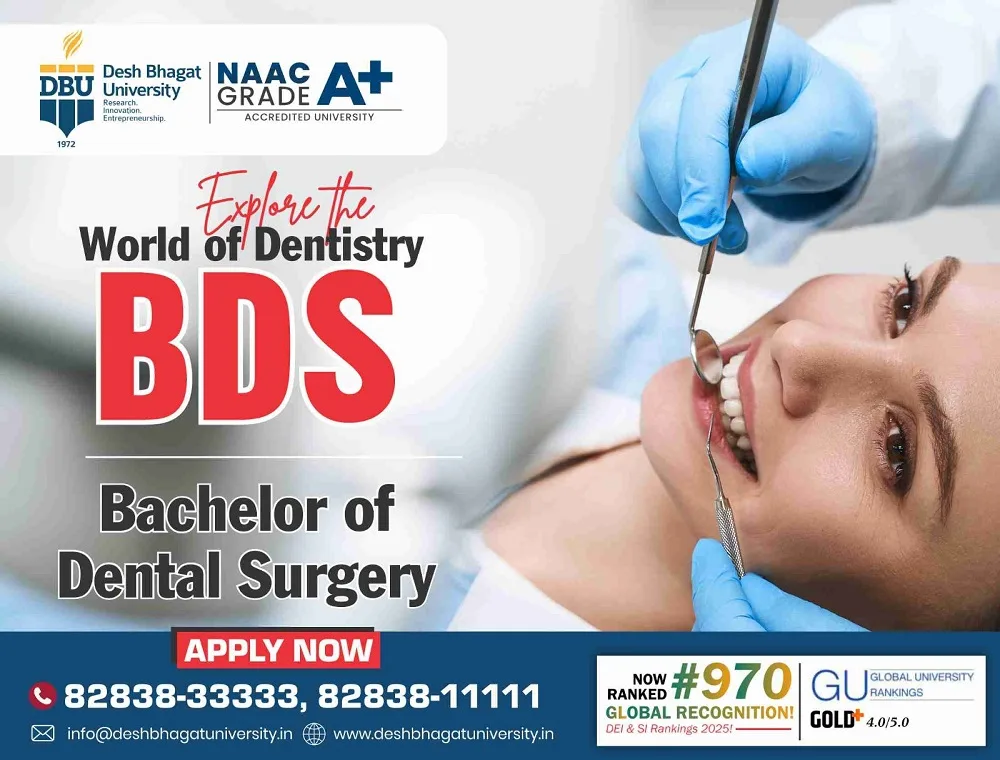
Choosing the right healthcare course after 12th is an important decision for students who want to build a successful career in the medical field. Among the various healthcare programs available, the BDS Course is one of the most popular options for students interested in dentistry and oral healthcare. The course provides students with the knowledge and practical skills required to diagnose, prevent, and treat dental and oral health problems.
The demand for qualified dental professionals is increasing due to growing awareness about oral hygiene, cosmetic dentistry, and preventive healthcare. As a result, the BDS Course offers excellent career opportunities in hospitals, dental clinics, research institutions, and healthcare organizations. Students who complete this program can pursue rewarding careers as dentists, dental surgeons, researchers, and healthcare professionals.
In this article, you will learn everything about the BDS Course, including its full form, eligibility, admission process, duration, fees, subjects, career opportunities, salary, and future scope.
BDS Full Form
The full form of BDS is Bachelor of Dental Surgery. It is a professional undergraduate degree in dentistry that focuses on oral healthcare, dental treatment, and patient care. The BDS Course combines classroom learning, laboratory training, and clinical practice to prepare students for careers in dentistry and oral health services.
After completing the course, graduates can work as dental professionals in clinics, hospitals, healthcare institutions, and research organizations. BDS is also the basic qualification required to practice as a dentist in India.
What is BDS Course?
The BDS Course (Bachelor of Dental Surgery) is a professional undergraduate degree program that focuses on oral healthcare, dental sciences, and patient care. The course is designed to equip students with the knowledge and practical skills required to diagnose, prevent, and treat diseases and conditions affecting the teeth, gums, jaws, and oral cavity.
The program combines classroom learning, laboratory training, clinical practice, and internship experience to provide a strong foundation in dentistry. Students gain both theoretical knowledge and hands-on clinical exposure, helping them develop the professional competencies required for a successful career in dental healthcare.
During the BDS Course, students study a wide range of subjects, including Human Anatomy, Dental Anatomy, Oral Pathology, General Medicine, General Surgery, Orthodontics, Periodontology, Prosthodontics, Oral Medicine, Oral Surgery, Pediatric Dentistry, and Community Dentistry.
A key feature of the BDS Course is the compulsory clinical training and internship, which allows students to work with patients under professional supervision. This practical experience helps them develop diagnostic, treatment, and patient management skills essential for modern dental practice.
BDS Course Highlights
| Particulars | Details |
| Course Name | BDS Course |
| Full Form | Bachelor of Dental Surgery |
| Course Level | Undergraduate |
| Duration | 5 Years (Including Internship) |
| Eligibility | 10+2 with Physics, Chemistry, and Biology |
| Admission Process | Entrance Exam Based |
| Internship | Mandatory |
| Career Options | Dentist, Dental Surgeon, Researcher, Lecturer |
| Average Salary | ₹3 LPA – ₹10 LPA+ |
| Higher Education | MDS, MPH, MBA, PhD |
| Industry | Healthcare and Dentistry |
Why Choose a BDS Course?
The BDS Course is an excellent choice for students who are interested in healthcare, patient care, and dentistry. The program offers a combination of academic learning, practical training, and clinical exposure that helps students build successful careers in the healthcare sector.
| Reason | Benefits |
| Strong Career Opportunities | Graduates can work in dental clinics, hospitals, healthcare organizations, and research institutions. |
| Clinical Training | Students gain practical experience through clinical sessions and internships. |
| Growing Demand | Increasing awareness of oral healthcare has created a demand for qualified dental professionals. |
| Diverse Career Paths | Opportunities are available in dentistry, research, academics, and healthcare management. |
| Contribution to Society | Dentists help improve oral health and overall quality of life for patients. |
| Higher Education Options | Students can pursue MDS and other specialized dental programs after graduation. |
| Professional Recognition | BDS is a respected healthcare qualification with long-term career growth opportunities. |
The healthcare industry continues to expand, making dentistry one of the most promising career options for students who want to make a positive impact on people’s health and well-being.
BDS Eligibility Criteria
Students who wish to apply for the BDS Course must meet the eligibility requirements prescribed by the university and regulatory authorities. The eligibility criteria ensure that candidates have the necessary academic background to pursue dental education.
Basic Eligibility Requirements
- Must have passed 10+2 or equivalent examination from a recognized board.
- Must have studied Physics, Chemistry, and Biology (PCB) as compulsory subjects.
- Should have obtained the minimum qualifying marks as per the admission guidelines.
- Must meet the age requirements applicable at the time of admission.
Students are advised to check the latest admission guidelines and eligibility criteria before applying for the BDS Course.
BDS Admission Process
The admission process for the BDS Course is designed to ensure that eligible candidates are selected for professional dental education. Students must complete the required admission steps and fulfill the eligibility criteria prescribed by the university.
| Step | Admission Process |
|---|---|
| Step 1 | Check the eligibility criteria for the BDS Course. |
| Step 2 | Complete and submit the application form with accurate details. |
| Step 3 | Appear for the required entrance examination. |
| Step 4 | Check the result and merit status. |
| Step 5 | Participate in counseling and seat allocation. |
| Step 6 | Submit the required documents for verification. |
| Step 7 | Pay the admission fee to confirm the seat. |
| Step 8 | Complete the enrollment process and begin the course. |
Students are advised to regularly check admission notifications and follow the university guidelines to ensure a smooth admission process.
BDS Course Duration
The BDS Course duration is 5 years, which includes:
- 4 years of academic study
- 1 year of compulsory rotatory internship
The academic portion of the program focuses on dental sciences, medical sciences, and clinical training, while the internship provides practical exposure to patient care and dental procedures.
Duration Structure
| Year | Focus Area |
| 1st Year | Basic Medical and Dental Sciences |
| 2nd Year | Pre-Clinical and Para-Clinical Subjects |
| 3rd Year | Clinical Dental Subjects |
| 4th Year | Advanced Clinical Training |
| 5th Year | Internship and Patient Care Training |
The internship allows students to apply their knowledge in real clinical settings under the supervision of experienced dental professionals.
Skills Required for BDS Course
To succeed in the BDS Course, students should develop a combination of technical, professional, and personal skills. These skills help students perform well during their studies and build successful careers in dentistry.
| Skill Category | Key Skills |
| Technical Skills | Knowledge of biology, anatomy, dental procedures, and oral healthcare |
| Professional Skills | Communication, patient counseling, teamwork, and problem-solving |
| Personal Skills | Attention to detail, time management, leadership, and ethical decision-making |
Developing these skills helps students provide quality dental care and improve patient outcomes.
What Do Students Learn in a BDS Course?
The BDS Course provides students with comprehensive knowledge of dentistry, oral healthcare, and patient care through classroom learning, laboratory training, clinical practice, and internship experience.
| Learning Area | What Students Learn |
|---|---|
| Human Anatomy & Physiology | Structure and functions of the human body and organ systems |
| Dental Anatomy | Structure, development, and function of teeth and oral tissues |
| Oral Pathology | Identification and diagnosis of oral diseases and disorders |
| Dental Materials | Properties and applications of materials used in dental treatments |
| General Medicine | Understanding medical conditions that affect oral and overall health |
| General Surgery | Basic surgical principles and patient management |
| Oral Medicine | Diagnosis and treatment of oral health conditions |
| Orthodontics | Correction of teeth and jaw alignment issues |
| Prosthodontics | Replacement and restoration of missing teeth |
| Periodontology | Prevention and treatment of gum and periodontal diseases |
| Oral & Maxillofacial Surgery | Surgical procedures involving the mouth, jaw, and facial structures |
| Pediatric Dentistry | Dental care and treatment for children |
| Community Dentistry | Oral health promotion and public dental healthcare programs |
| Dental Radiology | Use of imaging techniques for diagnosis and treatment planning |
| Patient Care & Counseling | Communication, patient management, and oral healthcare guidance |
The BDS Course combines theoretical knowledge, practical training, clinical exposure, and internship experience to prepare students for successful careers in dentistry and oral healthcare.
BDS Course Subjects
The subjects included in the BDS Course may vary slightly among institutions, but the core curriculum remains largely similar.
| Year | Major Subjects | Key Learning Areas |
| 1st Year | Human Anatomy, Physiology, Biochemistry, Dental Anatomy | Human body structure, oral anatomy, and basic medical sciences |
| 2nd Year | General Pathology, Microbiology, Pharmacology, Dental Materials | Disease processes, medicines, and dental materials |
| 3rd Year | General Medicine, General Surgery, Oral Pathology | Medical conditions, surgical principles, and oral diseases |
| 4th Year | Orthodontics, Prosthodontics, Periodontology, Oral Medicine, Oral Surgery, Pediatric Dentistry | Clinical dental procedures and patient management |
| 5th Year | Internship Training | Practical exposure and patient care in clinical settings |
The curriculum is designed to help students develop both clinical and professional competencies required in modern dentistry.
Internship Training in BDS
The compulsory internship is one of the most important components of the BDS Course. During this training period, students gain practical experience by working with patients under the guidance of experienced dental professionals. The internship helps students apply their theoretical knowledge in real clinical settings and develop the skills required for professional dental practice.
Internship Training Areas
| Department | Training Focus |
|---|---|
| Oral Medicine & Radiology | Diagnosis of oral diseases and interpretation of dental imaging |
| Oral & Maxillofacial Surgery | Surgical procedures and management of oral conditions |
| Prosthodontics | Restoration and replacement of missing teeth |
| Orthodontics | Correction of teeth and jaw alignment problems |
| Periodontology | Prevention and treatment of gum diseases |
| Conservative Dentistry | Tooth restoration and preventive dental procedures |
| Pediatric Dentistry | Dental care and treatment for children |
| Community Dentistry | Oral health awareness and public healthcare programs |
Skills Gained During Internship
| Learning Area | Practical Skills Developed |
|---|---|
| Patient Examination | Assessing and diagnosing oral health conditions |
| Treatment Planning | Developing appropriate dental treatment plans |
| Dental Procedures | Performing basic restorative and preventive procedures |
| Oral Healthcare Management | Managing patient care and treatment outcomes |
| Preventive Dentistry | Promoting oral hygiene and disease prevention |
| Clinical Decision-Making | Applying knowledge to real patient cases |
| Patient Counseling | Communicating treatment plans and oral health advice |
| Infection Control | Following safety protocols and clinical standards |
The internship bridges the gap between academic learning and professional practice, helping students gain confidence, clinical expertise, and hands-on experience in modern dentistry.
Importance of Clinical Training in BDS
Clinical training is one of the biggest advantages of pursuing a BDS Course. It allows students to apply their theoretical knowledge in real healthcare settings and develop confidence in treating patients.
Benefits of Clinical Training
- Practical experience in dental procedures
- Direct patient interaction
- Exposure to modern dental equipment
- Improved diagnostic skills
- Better understanding of oral diseases
- Enhanced communication skills
- Professional development
This practical exposure plays a crucial role in preparing students for successful careers in dentistry and oral healthcare.
Key Areas of Dentistry Covered in BDS
Throughout the program, students gain knowledge in multiple dental specialties.
| Dental Specialty | Focus Area |
| Orthodontics | Correction of teeth and jaw alignment |
| Prosthodontics | Replacement of missing teeth |
| Periodontology | Treatment of gum diseases |
| Oral Surgery | Surgical treatment of oral conditions |
| Pediatric Dentistry | Dental care for children |
| Oral Medicine | Diagnosis and management of oral diseases |
| Community Dentistry | Public oral health and awareness programs |
These specialties help students understand different aspects of dentistry and explore future career opportunities in specialized fields.
Career Opportunities After BDS
After completing the BDS Course, graduates can explore a wide range of career opportunities in the healthcare sector. The growing awareness of oral health and dental care has increased the demand for qualified dental professionals in both public and private healthcare organizations.
| Career Area | Description |
| Clinical Dentistry | Provide dental treatment and oral healthcare services to patients. |
| Hospitals | Work in government and private hospitals as dental professionals. |
| Dental Clinics | Practice independently or join established dental clinics. |
| Research | Participate in dental and healthcare research projects. |
| Academics | Teach and train future dental professionals. |
| Public Health | Promote oral healthcare awareness and community health programs. |
| Healthcare Management | Work in healthcare administration and management roles. |
The BDS Course provides students with multiple career pathways and long-term growth opportunities in the healthcare industry.
Top Jobs After BDS Course
The BDS degree opens doors to several rewarding job roles in dentistry, healthcare, education, and research.
| Job Role | Key Responsibilities |
| Dentist | Diagnose and treat dental and oral health problems. |
| Dental Surgeon | Perform dental procedures and oral surgeries. |
| Orthodontist Assistant | Assist in correcting teeth and jaw alignment. |
| Oral Health Consultant | Provide guidance on oral hygiene and preventive care. |
| Dental Lecturer | Teach dental subjects in educational institutions. |
| Research Associate | Participate in dental and healthcare research activities. |
| Public Health Professional | Work on oral health awareness and community healthcare programs. |
| Healthcare Administrator | Manage healthcare services and operations. |
These job roles offer opportunities to work in both clinical and non-clinical environments.
Salary After BDS Course
The salary after a BDS Course depends on several factors, including experience, location, skills, specialization, and employer.
Average BDS Salary in India
| Experience Level | Average Salary Range |
| Freshers | ₹3 LPA – ₹6 LPA |
| 2–5 Years Experience | ₹5 LPA – ₹10 LPA |
| Experienced Professionals | ₹8 LPA – ₹15 LPA+ |
Salary figures may vary based on the organization, job role, and individual expertise.
Salary by Job Role
| Job Role | Average Salary Range |
| Dentist | ₹4 LPA – ₹8 LPA |
| Dental Surgeon | ₹5 LPA – ₹12 LPA |
| Dental Consultant | ₹4 LPA – ₹10 LPA |
| Research Associate | ₹4 LPA – ₹8 LPA |
| Dental Lecturer | ₹4 LPA – ₹9 LPA |
| Public Health Professional | ₹4 LPA – ₹8 LPA |
As professionals gain experience and specialization, their earning potential generally increases.
Government Jobs After BDS
Government organizations regularly recruit dental professionals for healthcare, public health, and research-related positions.
Government Career Opportunities
| Government Career Opportunities | Major Recruiters |
| Dental Officer | Government Hospitals |
| Dentist | State Health Departments |
| Public Health Officer | Government Healthcare Programs |
| Research Officer | Research Institutions |
| Healthcare Administrator | Public Sector Healthcare Organizations |
| Academic Positions | Government Medical and Dental Colleges |
Government jobs often provide:
- Job security
- Structured career growth
- Pension and retirement benefits
- Healthcare benefits
- Professional development opportunities
Many graduates choose government careers because of their stability and long-term growth prospects.
Private Sector Jobs After BDS
The private healthcare sector offers numerous employment opportunities for BDS graduates.
| Industry | Career Opportunities |
| Dental Clinics | Dentist, Dental Consultant, Oral Healthcare Specialist |
| Hospitals | Dental Surgeon, Clinical Dentist |
| Healthcare Organizations | Oral Health Advisor, Healthcare Professional |
| Research Institutions | Research Associate, Clinical Research Professional |
| Educational Institutions | Lecturer, Academic Coordinator |
| Healthcare Startups | Healthcare Consultant, Oral Health Specialist |
The private sector often provides competitive salary packages and exposure to advanced dental technologies and treatment methods.
Scope of BDS in India
The future scope of the BDS Course is promising due to increasing awareness of oral health and advancements in dental technology.
Reasons Why BDS Has Strong Future Scope
- Growing demand for dental healthcare services
- Increasing awareness of oral hygiene
- Expansion of healthcare infrastructure
- Rising demand for cosmetic dentistry
- Growth of specialized dental treatments
- Opportunities in research and academics
- Expanding public health initiatives
As the healthcare industry continues to grow, qualified dental professionals are expected to remain in demand across various sectors.
BDS Salary Abroad
The BDS Course can open doors to international career opportunities in countries such as the United States, Canada, Australia, the United Kingdom, New Zealand, and Gulf countries. Salaries abroad are generally higher than those offered in India; however, graduates may need to fulfill licensing and regulatory requirements before practicing in these countries.
The growing global demand for dental professionals makes BDS a promising career option for students seeking international opportunities.
Higher Education Options After BDS
After completing the BDS Course, students can pursue higher education to gain specialized knowledge and expand their career opportunities.
Popular Options Include:
- MDS (Master of Dental Surgery) – Specialization in dental sciences
- MBA in Healthcare Management – Healthcare leadership and administration
- Master of Public Health (MPH) – Public health and policy studies
- Clinical Research Programs – Research and pharmaceutical sectors
- Hospital Administration Programs – Healthcare operations and management
- PhD Programs – Advanced research and academic careers
These programs help BDS graduates enhance their expertise, improve career prospects, and explore diverse opportunities in the healthcare industry.
BDS vs MBBS
Many students compare BDS and MBBS while choosing a healthcare career. Both are respected professional degrees, but they focus on different areas of healthcare.
| Feature | BDS | MBBS |
| Full Form | Bachelor of Dental Surgery | Bachelor of Medicine and Bachelor of Surgery |
| Duration | 5 Years | 5.5 Years |
| Focus Area | Oral Health and Dentistry | General Medicine and Surgery |
| Internship | Mandatory | Mandatory |
| Career Path | Dentist, Dental Surgeon | Medical Doctor |
| Higher Education | MDS, MPH, MBA, PhD | MD, MS, MPH, MBA, PhD |
| Primary Focus | Dental and Oral Healthcare | General Healthcare and Patient Treatment |
Both courses offer excellent career opportunities. Students should choose based on their interests, career goals, and preferred area of healthcare.
Advantages of BDS Course
The BDS Course offers several benefits for students who want to build a career in dentistry and healthcare.
| Advantage | Benefit |
| Professional Degree | Recognized qualification in dentistry |
| Clinical Training | Extensive practical and patient-care experience |
| Career Opportunities | Jobs in clinics, hospitals, research, and academics |
| Growing Demand | Increasing need for dental professionals |
| Higher Education Options | Opportunities for specialization through MDS and other programs |
| International Scope | Career opportunities in various countries |
| Contribution to Society | Helps improve oral health and quality of life |
These advantages make the BDS Course a valuable option for students interested in healthcare and patient care.
Future Scope of BDS in India
The future of dentistry in India is promising due to increasing awareness of oral health and advancements in dental technology.
| Growth Area | Future Scope |
|---|---|
| Preventive Dentistry | Focus on oral health awareness and disease prevention. |
| Cosmetic Dentistry | Growing demand for smile enhancement and aesthetic treatments. |
| Dental Implants | Increasing need for advanced tooth replacement solutions. |
| Orthodontics | Rising demand for braces and teeth alignment treatments. |
| Pediatric Dentistry | Specialized dental care for children and adolescents. |
| Public Health Dentistry | Opportunities in community healthcare and oral health programs. |
| Oral Surgery | Advanced treatment of complex dental and facial conditions. |
| Dental Research | Career opportunities in innovation, academics, and clinical research. |
The demand for qualified dental professionals is expected to continue growing as healthcare services expand across urban and rural areas.
Conclusion
The BDS Course is one of the most respected healthcare programs for students interested in dentistry and oral healthcare. The course combines academic learning, clinical training, and practical experience to prepare students for successful careers in the dental profession.
From understanding dental diseases and patient care to performing clinical procedures and promoting oral health, the BDS Course provides a strong foundation for a rewarding healthcare career. Graduates can explore opportunities in dental clinics, hospitals, research organizations, educational institutions, and public healthcare programs.
With growing awareness of oral hygiene, advancements in dental technology, and increasing demand for qualified dental professionals, the future scope of the BDS Course remains strong. Students who are passionate about healthcare, patient care, and dentistry can consider the BDS Course as an excellent pathway toward a successful and meaningful career.
Frequently Asked Questions
The full form of BDS is Bachelor of Dental Surgery.
The BDS Course is a professional undergraduate degree that focuses on dentistry, oral healthcare, and the treatment of dental diseases.
The BDS Course duration is 5 years, including 4 years of academic study and 1 year of compulsory internship.
Students who have completed 10+2 with Physics, Chemistry, and Biology can apply, subject to eligibility requirements.
Yes. BDS graduates are qualified dental professionals and can practice dentistry after fulfilling the required regulations and licensing requirements.
Yes. A one-year compulsory internship is an important part of the BDS Course.
Students study subjects such as Human Anatomy, Physiology, Pharmacology, Oral Pathology, Orthodontics, Prosthodontics, and Oral Surgery.
Important skills include communication, attention to detail, problem-solving, patient counseling, teamwork, and clinical skills.
Graduates can work as Dentists, Dental Surgeons, Researchers, Lecturers, Public Health Professionals, and Healthcare Administrators.
Fresh graduates may earn approximately ₹3 LPA to ₹6 LPA, depending on skills, location, and employer.
Yes. BDS graduates can work in government and private hospitals, dental clinics, and healthcare institutions.
Students can pursue MDS, MPH, MBA in Healthcare Management, Clinical Research Programs, and PhD programs.
Yes. The BDS Course offers strong career opportunities, professional growth, and the chance to contribute to healthcare.
The scope is promising due to increasing demand for dental services, cosmetic dentistry, public healthcare programs, and specialized dental treatments.
Yes. Many countries offer opportunities for dental professionals, although graduates may need to fulfil local licensing requirements.