Bachelor of Optometry: Course Details, Salary, Duration 2026
November 14, 2025 2026-09-08 6:18Bachelor of Optometry: Course Details, Salary, Duration 2026
Bachelor of Optometry: Course Details, Salary, Duration 2026
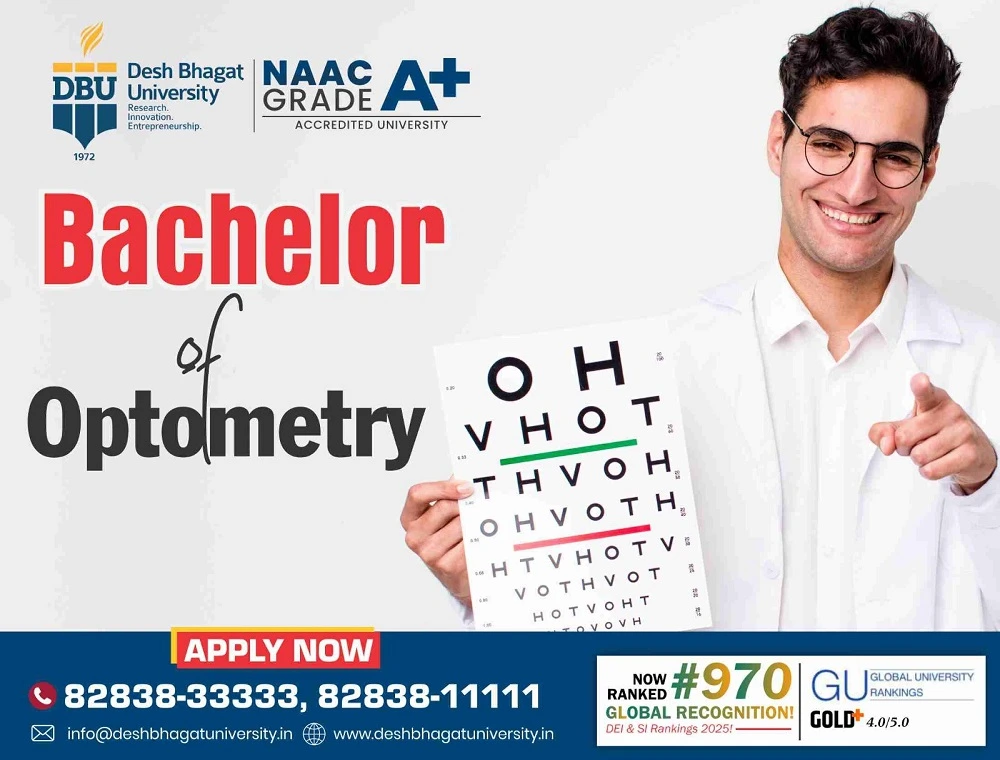
Good vision is an important part of everyday life. As screen use, lifestyle changes, and awareness of eye health increase, the need for trained eye-care professionals is also growing. Bachelor of Optometry is an undergraduate healthcare programme for students who want to build a career in eye care and vision science.
At Desh Bhagat University, we offer the Bachelor of Optometry programme under Allied Health Sciences. The programme combines classroom learning with practical training and internship experience. Students learn about the human eye, vision testing, optics, eye-care equipment, patient care, and common vision-related conditions.
If you are looking for B Optometry course details, this article explains the course in simple language. It covers the meaning of Bachelor of Optometry, eligibility, duration, subjects, admission process, fees, career opportunities, salary, and jobs after graduation.
Table of Contents
- What is Bachelor of Optometry?
- Bachelor of Optometry Course Highlights
- Bachelor of Optometry Eligibility
- Admission Process for Bachelor of Optometry
- Bachelor of Optometry Course Duration
- Bachelor of Optometry Fees
- Bachelor of Optometry Subjects
- Career Opportunities After Bachelor of Optometry
- Bachelor of Optometry Salary
- Why Choose DBU for Bachelor of Optometry?
- Frequently Asked Questions
What is Bachelor of Optometry?
Bachelor of Optometry is a professional undergraduate degree that focuses on eye care, vision assessment, and optical health. It prepares students with the knowledge and practical skills needed to work in the field of optometry.
Bachelor of Optometry means
The Bachelor of Optometry means an undergraduate degree focused on vision science and eye care. An optometrist examines vision, performs eye and vision tests, identifies many vision problems, and helps patients with suitable corrective options.
Optometry is different from ophthalmology. Optometrists focus mainly on vision care, eye examinations, correction of refractive problems, and related eye-care services. Ophthalmologists are medical doctors who can provide medical and surgical treatment for eye diseases.
At Desh Bhagat University, we focus on both theoretical knowledge and practical learning. Students get opportunities to understand eye anatomy, optics, vision testing, eye-care instruments, and patient handling.
What is a Bachelor of Optometry?
If you are asking what a Bachelor of Optometry is, it is a professional degree programme that prepares students for careers related to optometry and vision care.
The programme can be suitable for students who:
- Have an interest in healthcare
- Enjoy working with patients
- Are interested in eye health and vision
- Want to work with optical and clinical equipment
- Want a career in allied health sciences
- Prefer a healthcare career other than conventional medical programmes
Bachelor of Optometry Course Highlights
The following table gives an overview of the Bachelor of Optometry course details at Desh Bhagat University.
| Particular | Details |
| Course Name | Bachelor of Optometry |
| Degree | Undergraduate |
| Field | Allied Health Sciences |
| Course Duration | 4 + 1 Year Internship |
| Semester Structure | 10 Semesters |
| Direct Entry | 10+2 with PCB/PCM and required marks |
| Lateral Entry | Available for eligible Diploma in Optometry candidates |
| Learning Approach | Theory, practical learning and internship |
| Main Focus | Eye care, vision science and optometry |
| Career Area | Hospitals, eye-care centres, clinics, optical services and related healthcare settings |
According to our published programme information, the direct-entry route requires 10+2 with PCB/PCM or an equivalent qualification with 60% marks, while 55% marks are specified for SC/ST candidates. The programme is listed as 4 + 1 year, including internship, across 10 semesters.
Bachelor of Optometry Eligibility
Understanding Bachelor of Optometry eligibility is important before applying.
At Desh Bhagat University, the published eligibility criteria include:
Direct Entry
Candidates should have:
- Passed 10+2 or equivalent examination
- Studied PCB or PCM
- Secured 60% marks
- Candidates from SC/ST categories are eligible with 55% marks, as specified in the published criteria
Lateral Entry
Eligible candidates may also enter through the lateral entry route. The published criteria allow:
- A 2-year Diploma in Optometry after 10+2, or
- A 3-year Diploma in Optometry after 10th
The diploma should be from a recognised university or institution as applicable under the programme rules.
Students should always check the latest admission requirements before applying because eligibility rules can be updated for a new academic session.
Bachelor of Optometry Course Duration
The Bachelor of Optometry course duration at Desh Bhagat University is structured as 4 + 1 years, with internship included in the programme.
The published programme information lists:
4 + 1 Year — 9th and 10th Semester Internship — 10 Semesters
This structure gives students time to build their academic foundation and then gain practical experience.
For eligible lateral-entry students, the programme duration is shorter because previous relevant education is considered. The current university eligibility document lists the lateral-entry route as 3 + 1 year, including internship, across 8 semesters.
Subjects Covered in Bachelor of Optometry
The exact subjects may vary according to the approved curriculum and academic session. However, students in optometry generally study areas related to vision science, eye anatomy, optics, clinical practice, and patient care.
Some important areas include:
| Subject Area | What Students Learn |
| Anatomy | Structure of the human body and eye |
| Physiology | Functions of the body and visual system |
| Optics | Principles of light, lenses and vision |
| Ocular Anatomy | Structure of different parts of the eye |
| Vision Science | How vision works |
| Refraction | Assessment and correction of refractive errors |
| Ocular Diseases | Common eye conditions and their effects |
| Contact Lenses | Basic principles of contact lens use and care |
| Binocular Vision | Study of how both eyes work together |
| Clinical Optometry | Practical eye-care and patient assessment |
| Optometric Instruments | Use of equipment used in eye examinations |
| Patient Care | Communication and professional patient handling |
| Internship | Practical exposure in clinical environments |
The goal is to connect classroom knowledge with practical skills.
Practical Training and Internship
Practical learning is an important part of an optometry degree.
Students need more than theoretical knowledge to develop professional skills. They need to understand how eye examinations are performed, how equipment is used, and how patients are handled in a professional environment.
The internship component gives students an opportunity to apply their learning in practical settings under appropriate supervision.
During practical training, students may develop skills related to:
- Vision screening
- Refraction procedures
- Basic eye examinations
- Use of optometric instruments
- Lens-related knowledge
- Patient communication
- Clinical documentation
- Eye-care procedures
- Identification of common vision problems
Practical exposure can help students become more confident before entering professional employment.
Bachelor of Optometry Fees
Bachelor of Optometry fees are an important part of planning your education. The fee structure may vary depending on the academic session and applicable university policies. Therefore, students should check the latest official fee structure or prospectus from Desh Bhagat University before making any financial decisions.
The total cost may depend on factors such as:
- Tuition fees
- Examination-related charges
- Registration and other university charges
- Practical or laboratory requirements
- Internship-related arrangements, where applicable
- Other applicable institutional charges
We recommend checking the latest official fee details before admission, as fee structures may be revised for different academic sessions.
Want to know the latest Bachelor of Optometry fee structure? Contact us today for updated fee details and admission guidance.Skills Developed During the Bachelor of Optometry Course
A Bachelor of Optometry programme helps students develop a combination of clinical, technical, communication, and professional skills required for working in optometry and eye-care settings.
| Skill Area | Skills Developed | How It Helps Students |
|---|---|---|
| Vision Assessment | Visual acuity testing and basic vision assessment | Helps students understand and evaluate common vision-related needs |
| Clinical Observation | Observation and identification of basic ocular conditions | Supports accurate clinical assessment and patient care |
| Optics Knowledge | Understanding of lenses, optics, and vision principles | Builds a strong foundation for optometric practice |
| Optometric Equipment | Handling and basic use of optometric instruments | Develops practical skills required in clinical settings |
| Patient Communication | Active listening, explanation, and interpersonal communication | Helps students communicate effectively with patients |
| Problem-Solving | Analytical thinking and identifying appropriate solutions | Supports effective handling of routine clinical situations |
| Clinical Decision-Making | Applying knowledge to basic clinical situations | Helps students develop sound professional judgment |
| Patient Care | Patient-focused care and professional interaction | Promotes a positive and comfortable patient experience |
| Record Keeping | Maintaining patient and clinical records | Develops accuracy and organized documentation practices |
| Professional Ethics | Understanding ethical and professional responsibilities | Encourages responsible conduct in healthcare environments |
| Teamwork | Collaboration with healthcare and optical professionals | Prepares students to work effectively as part of a team |
| Time Management | Organizing clinical and academic responsibilities | Helps students manage multiple tasks efficiently |
Developing these skills can help Bachelor of Optometry graduates adapt to different clinical, healthcare, optical, and patient-care environments.
Career Opportunities After Bachelor of Optometry
There are several career paths after completing a Bachelor of Optometry.
Graduates can explore opportunities in healthcare, eye care, optical services, education, research, and related areas.
Bachelor of Optometry Jobs
Some possible Bachelor of Optometry jobs include:
| Job Role | Main Work |
| Optometrist | Vision assessment and eye-care services |
| Clinical Optometrist | Optometry services in clinical settings |
| Vision Consultant | Provides guidance related to vision and optical needs |
| Optical Consultant | Helps customers with optical products and services |
| Contact Lens Specialist | Supports contact lens-related services |
| Low Vision Specialist | Works with people who have low vision |
| Eye-Care Professional | Provides vision-related support in healthcare settings |
| Optical Retail Professional | Works in optical retail services |
| Research Assistant | Supports research in vision and eye care |
| Academic Professional | Teaching and training after meeting further requirements |
Desh Bhagat University’s existing programme information also identifies career areas such as optometrist, clinical optometrist, vision consultant, low-vision specialist, optical practice, optical retail, teaching, and research.
Admission Process
The admission process for the Bachelor of Optometry generally involves checking eligibility, completing the application, submitting documents, and completing the required admission formalities.
At Desh Bhagat University, students can follow these general steps:
| Step | Admission Process |
| 1 | Check the Bachelor of Optometry eligibility criteria |
| 2 | Complete the university admission application |
| 3 | Submit the required academic and personal documents |
| 4 | Complete document verification |
| 5 | Follow the applicable admission or selection process |
| 6 | Complete fee and admission formalities |
| 7 | Begin the academic programme |
The exact admission procedure may depend on the academic session and applicable university rules. Students should check the latest admission information before submitting their application.
Where Can Bachelor of Optometry Graduates Work?
After completing a Bachelor of Optometry degree and meeting applicable professional or regulatory requirements, graduates can explore career opportunities across a range of eye-care, healthcare, optical, research, and educational settings.
| Workplace / Sector | Potential Opportunities |
|---|---|
| Eye Hospitals | Clinical optometry, vision assessment, patient care, and support services |
| Eye Clinics | Vision testing, routine eye-care services, and patient interaction |
| Hospitals | Optometry and vision-care services within multidisciplinary healthcare teams |
| Optical Centres | Vision assessment, eyewear-related services, and customer guidance |
| Vision Care Centres | Eye and vision care services, patient assessment, and follow-up care |
| Optical Retail Organisations | Eyewear consultation, lens-related services, and customer support |
| Contact Lens Services | Contact lens-related assessment, fitting support, and patient education |
| Community Eye-Care Programmes | Vision screening, awareness programmes, and community-based eye-care initiatives |
| Research Organisations | Participation in optometry, vision science, and eye-care research activities |
| Educational Institutions | Academic, training, or support roles depending on qualifications and eligibility |
| Healthcare Organisations | Vision-care services and healthcare-related roles in various settings |
Career Scope After Bachelor of Optometry
The career scope after a Bachelor of Optometry can vary depending on professional registration or regulatory requirements, clinical experience, additional qualifications, and the specific role or organisation. Graduates may also pursue further education and specialised training to expand their professional opportunities.
Bachelor of Optometry Salary
The Bachelor of Optometry salary can vary depending on factors such as professional experience, job role, location, employer, clinical skills, qualifications, and area of specialisation.
Fresh graduates generally begin their careers in entry-level positions, while professionals with relevant experience, advanced skills, and additional qualifications may have opportunities for higher earnings.
| Experience Level | Indicative Annual Salary | Factors That May Influence Salary |
|---|---|---|
| Fresh Optometry Graduate | ₹2.5 lakh – ₹4 lakh | Entry-level role, location, employer, and practical skills |
| Experienced Optometry Professional | ₹4 lakh – ₹7 lakh | Work experience, clinical expertise, job role, and specialisation |
| Specialised / Advanced Roles | May vary | Additional qualifications, specialised skills, responsibilities, and organisation |
Factors Affecting Bachelor of Optometry Salary
The earning potential of an optometry graduate may depend on:
- Work experience
- Job role and responsibilities
- Geographic location
- Employer and organisation
- Clinical and technical skills
- Area of specialisation
The salary figures mentioned above are indicative estimates based on available programme information and should not be considered guaranteed salaries. Actual compensation may vary depending on the employer, location, qualifications, experience, and prevailing market conditions.
Students can improve their long-term career prospects by developing practical clinical skills, gaining relevant experience, pursuing additional qualifications, and staying updated with developments in optometry and eye care.
Higher Study Options After Bachelor of Optometry
A Bachelor of Optometry does not have to be the end of your education.
After completing the undergraduate degree, students may consider higher studies depending on their career goals and eligibility.
Possible academic directions include:
- Master-level study in Optometry
- Advanced studies in vision science
- Research programmes
- Teaching-related qualifications
- Doctoral-level research
Desh Bhagat University also publishes postgraduate opportunities in Optometry, including a Master of Optometry programme. The published eligibility states that applicants should have a B. Optom. degree with the specified marks.
Higher education can help students develop deeper knowledge and prepare for specialised, academic, or research-oriented career paths.
Why Choose Bachelor of Optometry?
Bachelor of Optometry can be a suitable choice for students who want to build a career in healthcare with a focus on eye care and vision.
| Benefit | Why It Matters |
|---|---|
| Focused Healthcare Career | The Bachelor of Optometry provides specialised knowledge of vision science, eye care, optics, and optometry. |
| Theory and Practical Learning | Students learn important concepts in the classroom and develop practical skills through training and internship. |
| Wide Career Opportunities | Graduates can explore roles in clinical optometry, eye care, optical services, healthcare, research, and education. |
| Scope for Higher Education | After completing the optometry bachelor’s degree, students can pursue postgraduate and research-based programmes according to their eligibility. |
| Patient-Centred Profession | Optometry involves working directly with patients and supporting their vision and eye-care needs. |
| Allied Health Sciences Career | The course offers a professional pathway into the allied health sciences sector and related healthcare services. |
| Practical Clinical Exposure | Internship and practical training help students apply their academic knowledge in real-world healthcare settings. |
| Professional Skill Development | Students can develop skills in vision assessment, optical concepts, patient communication, equipment handling, and clinical practice. |
Why Study Bachelor of Optometry at Desh Bhagat University?
At Desh Bhagat University, we focus on providing students with academic knowledge and practical exposure.
Our Bachelor of Optometry programme is designed around the study of eye care, vision science, optics, clinical skills, and practical training.
Students can benefit from:
- Undergraduate education in Optometry
- Practical learning opportunities
- Internship-based training
- Exposure to optometry-related subjects
- Opportunities for higher education
- Academic guidance and professional development
Our programme information places Bachelor of Optometry within our Allied Health Sciences offerings and includes both direct and lateral-entry pathways for eligible students.
Bachelor of Optometry vs Ophthalmology
It is common for students to confuse optometry with ophthalmology. Both fields are connected with eye care, but their roles are different.
| Optometry | Ophthalmology |
| Focuses on vision and eye care | Focuses on medical and surgical eye care |
| Optometrists are trained in optometry | Ophthalmologists are medical doctors |
| Includes vision assessment and refractive care | Includes diagnosis and medical/surgical treatment of eye diseases |
| Bachelor of Optometry is an undergraduate optometry degree | Ophthalmology is pursued through medical education and specialist training |
| Can include optical and vision-care services | Can include eye surgery and advanced medical treatment |
Students should understand these differences before choosing a career path.
Is Bachelor of Optometry a Good Career Choice?
Bachelor of Optometry can be a good career choice for students who have a genuine interest in eye care, healthcare, science, and patient interaction.
The programme provides a specialised pathway into the vision-care field. It also offers opportunities to gain practical experience and continue with higher education.
However, students should choose the course based on their interests, academic background, career goals, and willingness to work in a patient-focused healthcare environment.
Conclusion
The Bachelor of Optometry is a professional undergraduate programme focused on eye care, vision science, optics, and practical optometry skills. At Desh Bhagat University, we provide a structured programme that combines academic learning with practical training and internship experience.
The course is suitable for eligible students who have completed 10+2 with the required science subjects and marks. The published programme structure includes 4 + 1 years with an internship for direct entry, while eligible diploma holders may enter through the lateral-entry route.
After completing the degree, graduates can explore Bachelor of Optometry jobs in eye-care, clinical, optical, healthcare, research, and education-related areas. Students can also consider postgraduate education for further specialisation.
If you are interested in eye care and want to build a professional career in allied health sciences, Bachelor of Optometry can be an option worth considering.
Frequently Asked Questions
Bachelor of Optometry is an undergraduate professional degree focused on eye care, vision science, optics, vision testing, and related clinical skills.
The bachelor of optometry means a professional degree that prepares students for careers in optometry and vision-care services.
At Desh Bhagat University, the direct-entry programme is 4 + 1 year, including internship, and covers 10 semesters.
Candidates generally need to complete 10+2 with PCB/PCM and meet the required marks specified by Desh Bhagat University.
The course covers subjects and areas such as anatomy, physiology, optics, vision science, refraction, ocular diseases, contact lenses, binocular vision, and clinical optometry.
The Bachelor of Optometry fees depend on the applicable academic session and fee structure. To know the latest fee details, please contact us or check the latest admission information.
Graduates can explore careers as optometrists, clinical optometrists, vision consultants, optical consultants, low-vision specialists, research professionals, and other related roles.
Bachelor of Optometry jobs can be available in eye hospitals, hospitals, eye clinics, optical centres, vision-care centres, research organisations, and educational institutions.
The Bachelor of Optometry salary depends on experience, job role, location, employer, skills, and qualifications. Fresh graduates generally begin with entry-level salaries, which can increase with experience.
Yes. After completing the degree, students can consider postgraduate and research programmes in optometry and related areas, subject to the applicable eligibility requirements.